
Alexandria, Louisiana.
There's a pen on the front desk at DJ's Bail Bonds.
The woman who runs the front desk writes every application by hand: a defendant file, a co-signer file, three references each, the payment sheets. The same names, paper onto paper, for years.
So we built DJ a system where the application fills itself out. When he saw it, he said it out loud:
“She's never gonna have to use that pen, ever again.”
Here's what her Monday morning looks like now.
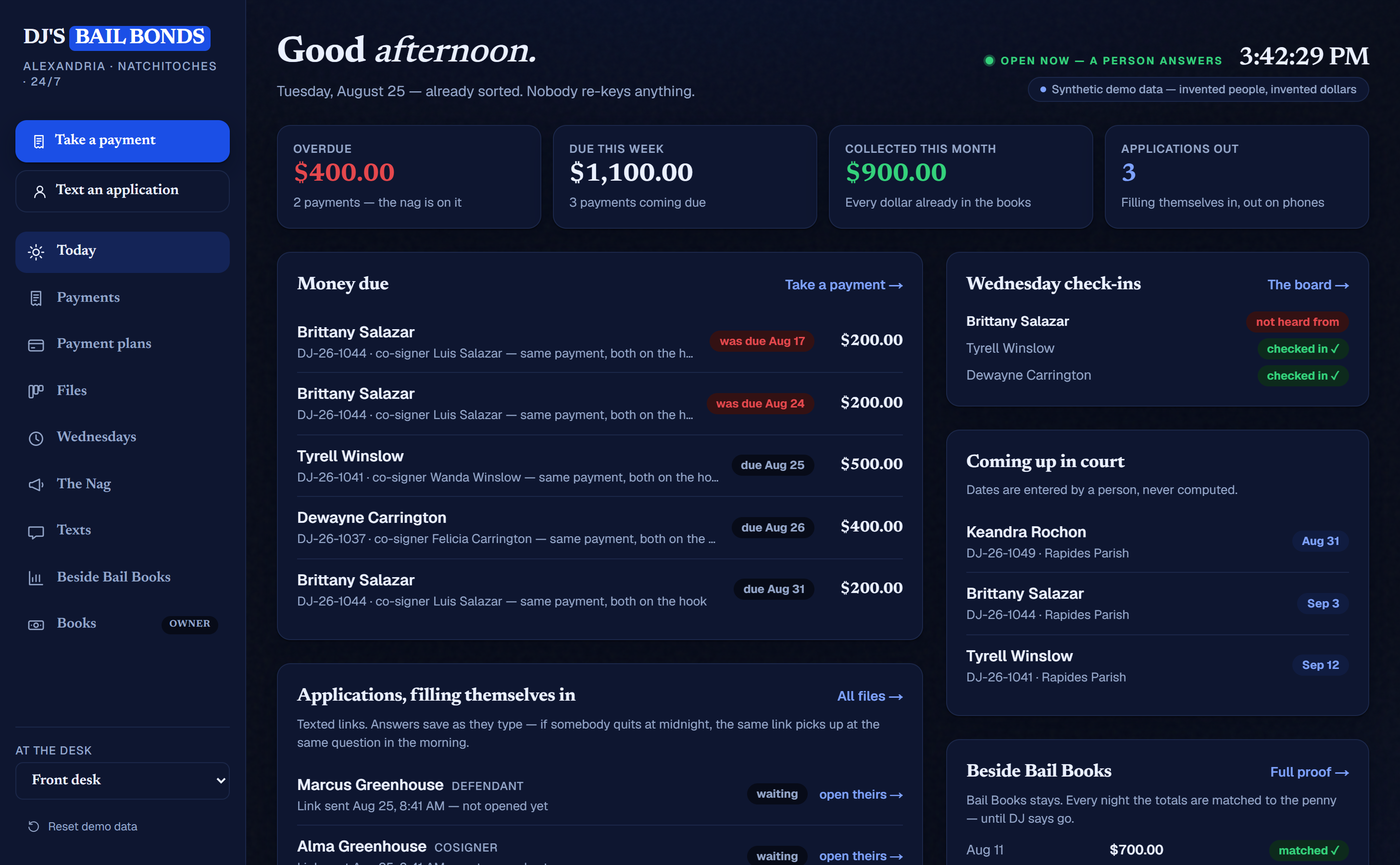
One screen, sorted before she sits down. It shows who owes money, who's behind, who checked in this week, and who has court. It also shows the applications that are out on people's phones right now, filling themselves in while she drinks her coffee.
Bail work happens at midnight, and now the paperwork does too.
People don't get arrested during office hours. Now the office texts a link the moment the call comes in:
A co-signing grandmother in another state opens it on her own phone. It saves every answer as they type — fall asleep on question six and it reopens on question six. At the end, a thumb signs it.
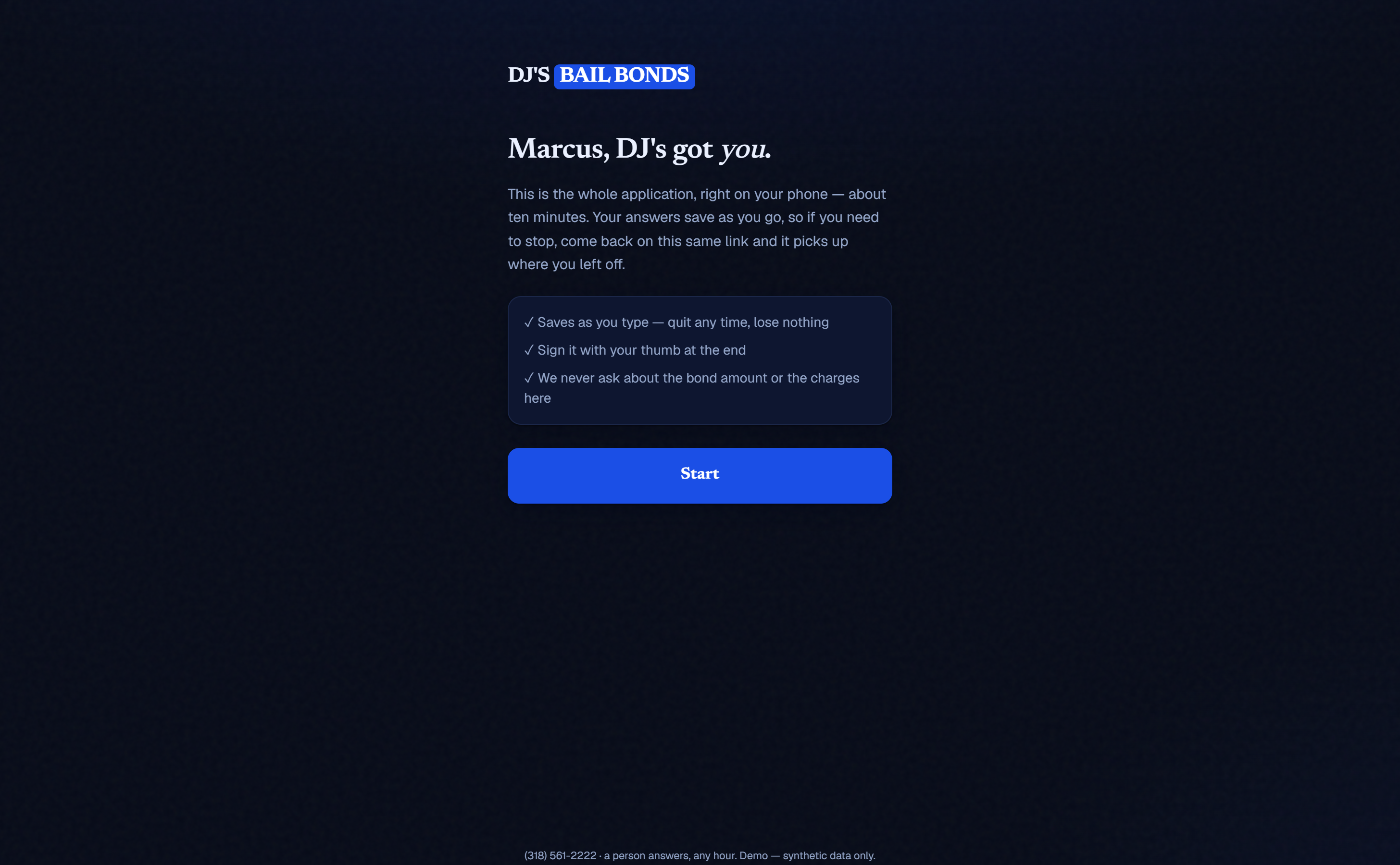
One more thing about that screen. The phone form never asks the bond amount or the charges. That conversation happens at the office, human to human. The phone only gathers what the file needs. Custom software knows the difference.
Next, payment plans. Here's how DJ builds one now.
Say a man owes $3,000 on a bond fee and can't pay it all at once. DJ just says what he wants:
“$3,000 balance. $500 every two weeks. Populate the dates.”
The whole schedule was on screen before he finished the sentence.
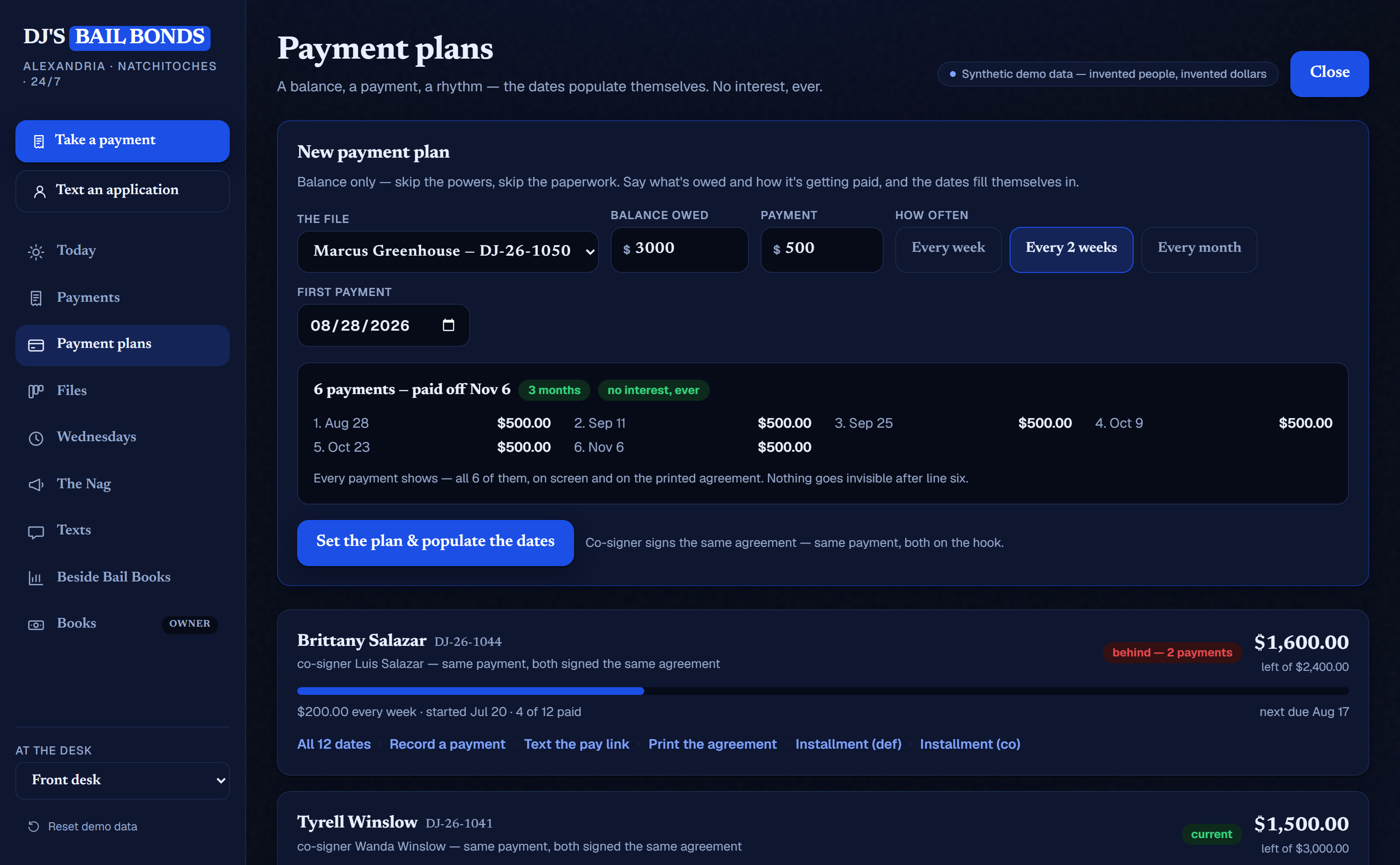
No interest. Ever. DJ doesn't charge it, so we didn't build a place for it. There isn't even a column for interest anywhere in the system, and you can't charge what the software can't hold.
While we were building, we found a problem in the old paper form. This part should bother you a little.
The old printed form had room for six payments — then the page ran out. Make that $3,000 into $250 every two weeks and the plan runs twelve. Payments seven through twelve were real, and the customer owed every one. They just never appeared on the paper he signed.
People were signing up for payments they could not see.
Nobody did it on purpose. It was a form nobody fixed, sitting in a copier tray for years. The new agreement prints every payment, every time — written into the code, so no human can forget it and no form can hide it.
Then we gave him a bill collector that never sleeps.
The day before a payment is due, it texts a friendly heads-up with the pay link. Two days late, five days late, every week after — polite every single time, and the second the money lands, it goes quiet on its own.
The front desk never makes another awkward collection call.
Court still wants paper, and that's fine. The paper just got better.
A bail office can't go paperless, and we never tried. The same packets still print — filled straight from the file, on letterhead, thumb signature and audit stamp on the page. Nobody types a word of it.
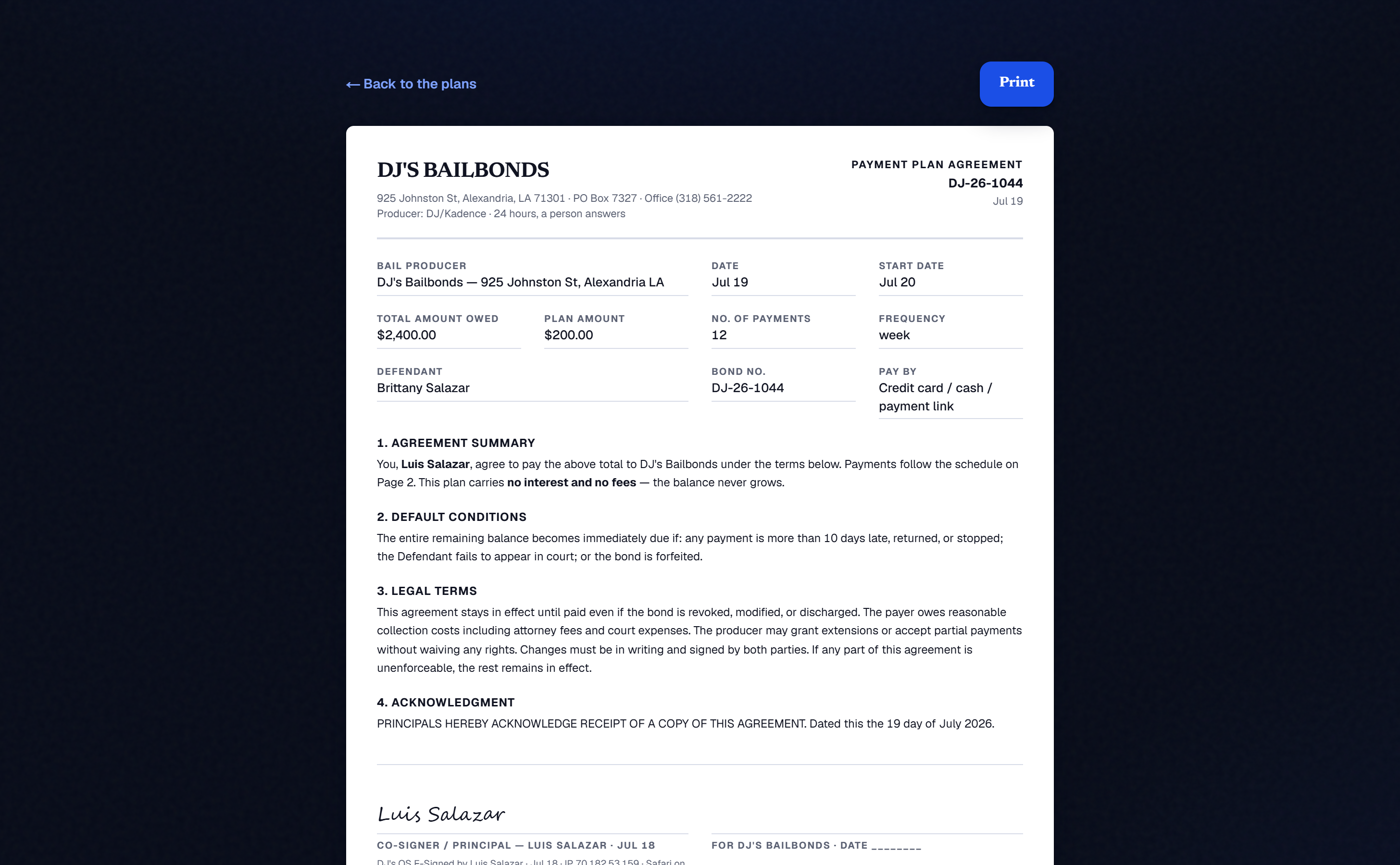
Same paper the court has always seen. It just shows up dressed better than it ever did off the copier.
In this building, everybody gets a trial, even the software.
We ripped nothing out on day one. The old software keeps running; the new one runs beside it, totals laid side by side every night — match to the penny or somebody hears about it.
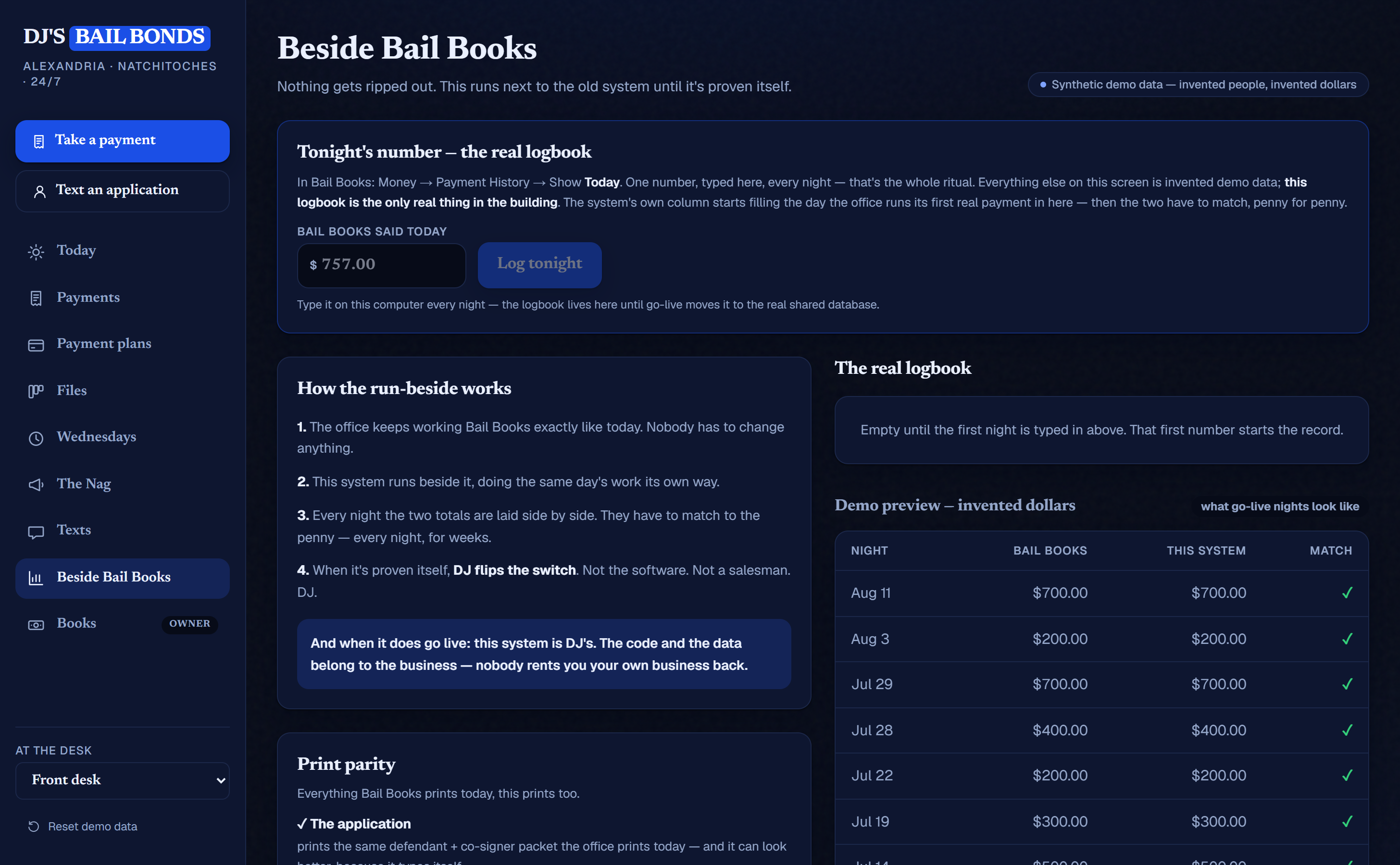
The verdict doesn't come from me, and it doesn't come from a salesman. When the numbers have matched long enough to trust, DJ flips the switch himself.
And one feature in the build is a ban.
Everybody in America is selling robot phone receptionists this year. DJ's system is forbidden from ever answering his phone, and the ban is printed on its front screen where the whole office can read it. Here's why. Calls from the jail come collect. A human has to pick up, hear the operator, and accept the charges. If a robot answers, the collect call dies, and that call was the whole business.
We stood in that office — that's why the ban exists. The phone stays human, day and night, forever. Half of this job is knowing what to build. The other half is knowing what to refuse.
One more thing, and it's the part the big software companies can't say out loud.
The software DJ rents today keeps his data — he pays every month to look at his own records. The new system: the code is his, the data is his, his name is on the title the same way it's on the building. If he ever tells me to leave, he keeps all of it.
Nobody rents you your own business back.
I'm Trevor. Found It Software, Alexandria, Louisiana.
Every screen above is the real system running demo data. Every name and dollar on it is invented. No client information, ever.